Food Loss and Waste
A Systems Perspective of Fresh Produce Food Loss and Waste in Canada
Food loss and waste (FLW) in Canada’s fresh produce sector is a systemic and costly challenge, with nearly half of all food produced lost or wasted each year, imposing major economic, environmental and social impacts. The CPMA FLW Landscape Report provides a comprehensive diagnosis of the scale, drivers and consequences of FLW in produce, and sets out a clear, evidence‑based agenda for coordinated industry action. It positions CPMA as a convenor to align measurement, mobilize solutions and accelerate progress across the value chain.
Key Sections of the Report
- Part 1: The State of Food Loss & Waste – Quantifies the scale of FLW (46.5% wasted; 41.7% potentially recoverable), identifies root causes across the supply chain, and explains vulnerabilities unique to fresh produce, including perishability and cosmetic standards.
- Part 2: What We Heard – Synthesizes insights from growers, packers, shippers, retailers and partners, highlighting themes such as logistics, measurement, technology, packaging, donation pathways, policy and consumer education.
- Part 3: The Economics – Details the $17.72 billion annual cost of FLW in fresh produce, commodity‑specific loss rates and the triple‑bottom‑line impacts, making a clear business case for action.
- Part 4: CPMA Strategic Recommendations – Outlines practical actions, including harmonized metrics, prevention and value‑recovery pilots, infrastructure investment, policy advocacy and progress tracking.
- Part 5 and Annexes – Provide decision tools, ecosystem mapping and spoilage frameworks to support implementation.
Food Loss and Waste Use Case Tool
Reducing food loss and waste requires practical, tested approaches. CPMA’s food loss and waste use cases feature real world examples from across the fresh produce supply chain. Learn how fellow members are addressing food loss and waste through operational changes, partnerships, and innovation.
Developed as part of CPMA’s broader food loss and waste initiative, these use cases share peer driven insights that can help inform your own strategies and decisions. Explore the examples to discover ideas relevant to your business, identify opportunities for action, and learn from what’s already working across Canada’s produce sector.
Waste Efficiency Tool
The Waste Efficiency Tool helps CPMA member organizations identify and reduce waste within their operations through a simple, structured process improvement approach. Developed with Value Chain Management International (VCMI), it guides users through 14 practical steps commonly used at the start of a continuous improvement initiative.
This tool supports organizations in:
- Pinpointing and addressing recurring process inefficiencies
- Reducing operational and product waste (e.g., food, packaging, energy, transport, labour)
- Improving productivity and financial performance
Projects typically run over four to six weeks, producing measurable returns on investment by lowering defects and waste.
No advanced statistical expertise is required, only leadership commitment, defined scope, and cross-functional collaboration.
Waste Less at Home with Half Your Plate
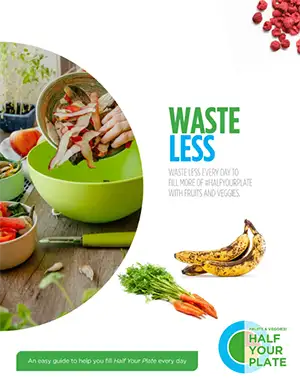
Fruits and vegetables are among the most wasted foods in Canadian households. The Half Your Plate Waste Less Guide helps Canadians reduce produce waste by teaching practical tips for buying, storing, and using fruits and vegetables more effectively.
Inside the guide, readers will find:
- Smart shopping strategies
- Produce storage tips that extend freshness
- Ways to repurpose leftovers and scraps
- Root-to-stem recipes
- Zero-waste vegetable stock ideas
This resource helps Canadians fill half their plate with fruits and veggies — while wasting less along the way.